RUFORUM Regional Nodes

Decentralized hubs that bring RUFORUM closer to the universities, communities and policymakers we serve across Africa.

To effectively coordinate its network of over 170 universities across 40 African countries, operating in four official African Union languages, RUFORUM decentralizes its operations through Regional Hubs (or Nodes). These nodes bring decision-making, capacity-building and partnership-mobilization closer to where the work happens.

The Three Regional Nodes

West Africa Node

Headquartered in Benin

Launched to serve primarily Francophone countries, coordinating RUFORUM's work across West Africa.

Southern Africa Node

Coordinated out of Malawi

Anchors RUFORUM's coordination across the Southern Africa sub-region and its member universities.

Eastern & Central Africa

RUFORUM Secretariat — Makerere University, Kampala

Coordinated primarily from the central RUFORUM Secretariat, serving Eastern and Central African members.

What the Nodes Do

A continuous cycle of localized action that powers regional impact.

01

Tailor Programs

Adapt capacity-building, agricultural research and educational programs to the specific contexts, languages and priorities of each sub-region.

02

Promote Networking

Foster cross-border collaboration among member universities, smallholder farmers and policymakers within each sub-region.

03

Mobilize Resources

Help mobilize resources and manage regional training networks directly within the sub-regions, ensuring responsiveness and impact.

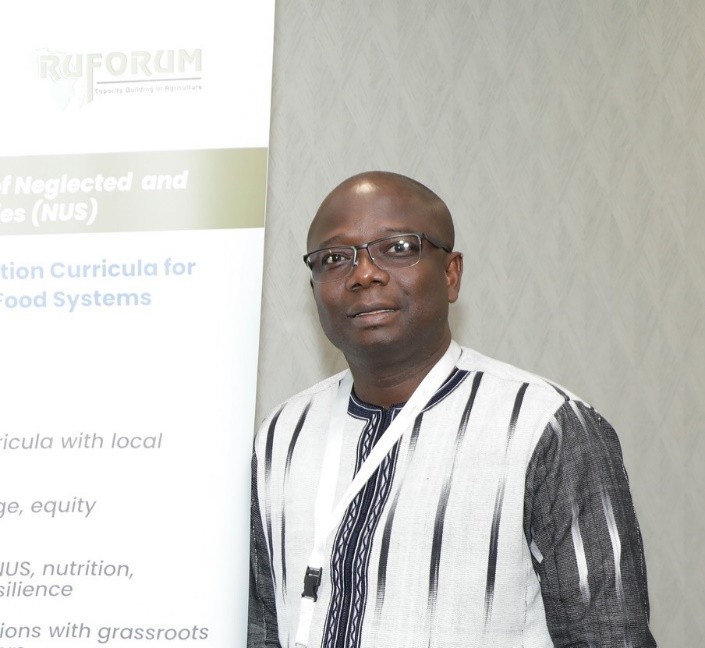
Prof. Achille Assogbadjo
West Africa Regional Node

Strategic Priorities

Prof. Achille Assogbadjo
Lead Coordinator, RUFORUM West Africa Regional Node

The RUFORUM West Africa Regional Node is guided by six strategic priorities designed to strengthen regional collaboration and impact in agricultural higher education positioning the Node as a driver of regional integration, institutional resilience, and transformative change, in alignment with RUFORUM Vision 2030 and the African Union's Agenda 2063.

01

Mapping & Coordination

Establish governance structures and identify key human and financial resources across the region.

02

Thematic Networking on Regional Priorities

Build communities of practice around agroecology, biodiversity, food security, climate-smart agriculture and the circular bioeconomy.

03

Capacity Building

Enhance the competencies of faculty, researchers and administrators in research management, proposal writing and digital tools.

04

Youth Empowerment & Employability

Equip graduates with entrepreneurial skills and career readiness through bootcamps and mentorship.

05

Collaborative Research & Innovation Mobilization

Incubate multi-country research proposals and develop a regional seed grant scheme.

06

Policy Dialogue & Advocacy

Convene science-policy engagements with ECOWAS, WAEMU and national ministries, ensuring research outcomes inform regional decision-making.